
Reviewed by: Dr. Usman Ahmad, DO — Board-Certified Physiatrist, Advanced Sports & Spine
Shoulder pain without injury — no fall, no accident, no obvious cause — is one of the most common complaints a pain management specialist sees. You go to bed fine and wake up unable to lift your arm. Or the ache builds so gradually you can’t pinpoint when it started.
The shoulder is the most mobile joint in the body, which also makes it one of the most vulnerable to gradual wear, inflammation, and referred pain from nearby structures. The reassuring part: most non-traumatic shoulder pain is highly treatable without surgery.
Below are the six most common causes, the red flags that mean it’s time to see a doctor, and what a physiatrist at Advanced Sports & Spine can do to help.
6 Common Causes of Shoulder Pain Without Injury
1. Rotator Cuff Tendinitis (Shoulder Impingement)
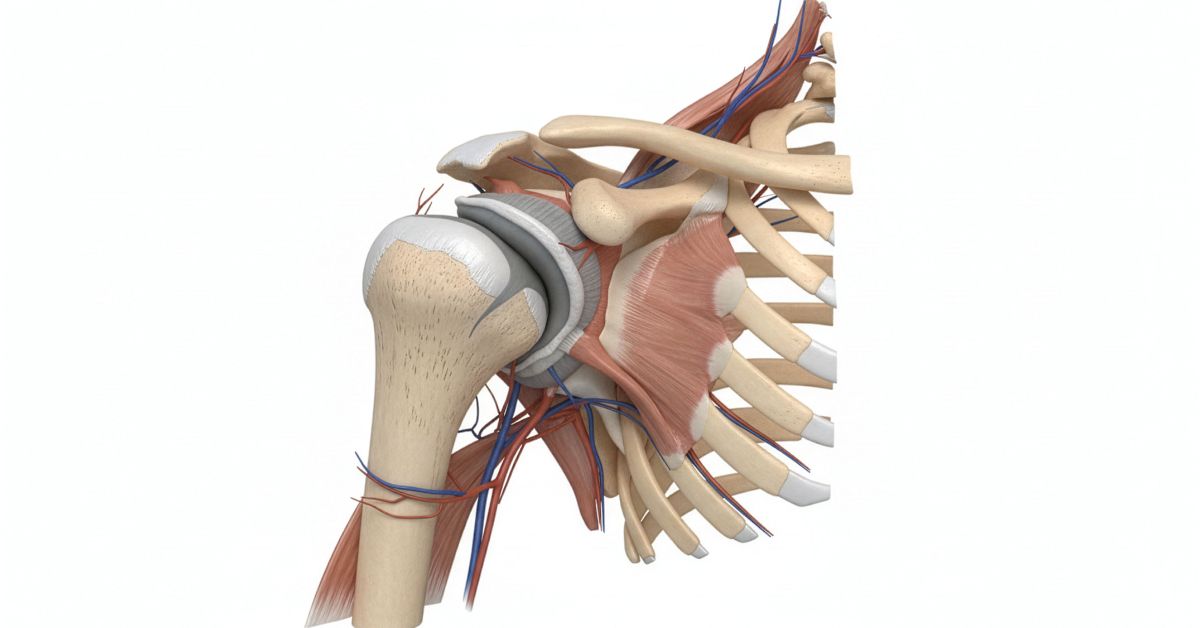
The rotator cuff is a group of four muscles and tendons that hold the shoulder joint together and power its movement. When those tendons become inflamed — from repetitive overhead motions, prolonged desk posture, or simple age-related wear — the result is rotator cuff tendinitis, also called shoulder impingement.
No single traumatic event is required. Years of reaching overhead, sleeping on the same side, or sitting hunched at a screen can gradually irritate the tendons until pain appears seemingly out of nowhere. It is the single most common cause of shoulder pain without injury in adults.
Typical symptoms:
- Aching pain in the outer shoulder or upper arm
- Pain when raising the arm above shoulder height
- Discomfort reaching behind your back
- Night pain when lying on the affected shoulder
- Weakness when lifting or rotating the arm
Most cases resolve with conservative care: corticosteroid injections to reduce inflammation, targeted physical therapy, and activity modification. Surgery is rarely needed.
2. Shoulder Bursitis
Between the rotator cuff tendons and the bones above them sits a fluid-filled cushion called the subacromial bursa. Repetitive overhead work — painting, shelving, pressing at the gym — can inflame this bursa, causing shoulder bursitis. It frequently develops alongside rotator cuff tendinitis, since inflamed tendons irritate the neighboring bursa.
Typical symptoms:
- Tenderness or swelling on the outer shoulder
- Sharp pain when raising the arm to the side
- Pain with specific movements that eases at rest
- Warmth over the shoulder joint
Ultrasound-guided bursa injections are highly effective and can provide significant relief within 48–72 hours. For patients who want to avoid repeated injections, PRP therapy offers a regenerative alternative that promotes lasting tissue repair.
3. Frozen Shoulder (Adhesive Capsulitis)
Frozen shoulder occurs when the connective tissue capsule surrounding the joint thickens and tightens, severely restricting movement — often with no identifiable cause. It’s more common in people with diabetes, thyroid disorders, and those who’ve kept the shoulder immobile after a minor issue. Many patients have zero memory of any injury.
The condition moves through three stages: a painful “freezing” phase (3–9 months), a stiff “frozen” phase (9–12 months), and a slow “thawing” phase. Early intervention makes a significant difference in how long the process takes.
Typical symptoms:
- Progressively worsening stiffness over weeks to months
- Severe restriction of movement in all directions
- Pain at rest and sharp pain at the end range of motion
- Difficulty with routine tasks: reaching a seatbelt, brushing hair, getting dressed
- Night pain that disrupts sleep
Treatment options include corticosteroid injections, suprascapular nerve blocks, and guided physical therapy. Our frozen shoulder rehabilitation exercises are a good place to start alongside professional treatment.

4. Shoulder Osteoarthritis
While the knee and hip are more commonly affected, the shoulder — particularly the acromioclavicular (AC) joint at its top — is not immune to osteoarthritis. Cartilage breaks down over years of use, and pain develops gradually as bone begins to contact bone. It’s most common after age 50 but can appear earlier in people with a history of high shoulder stress.
Typical symptoms:
- Deep, aching joint pain
- Morning stiffness or stiffness after rest
- Grinding or clicking with movement
- Gradual loss of range of motion over months to years
- Tenderness when pressing on the top of the shoulder
Non-surgical management works well for most patients: corticosteroid or hyaluronic acid injections to reduce friction and inflammation, and regenerative options like PRP therapy to slow cartilage breakdown and promote repair.
5. Calcific Tendinitis
In calcific tendinitis, calcium deposits form inside the rotator cuff tendons. They can sit silently for months or years — then suddenly become acutely inflamed, producing some of the most severe shoulder pain patients ever experience. One day you’re fine; the next you can barely lift your arm. It’s a textbook example of shoulder pain without any injury.
Typical symptoms:
- Sudden, severe shoulder pain — often worst in the morning
- Significant loss of movement during acute flares
- Warmth and tenderness over the shoulder
Shockwave therapy and ultrasound-guided needle aspiration are highly effective at breaking up and removing calcium deposits without surgery. Advanced Sports & Spine has extensive experience treating calcific tendinitis using both techniques.
6. Referred Pain From the Cervical Spine
The shoulder and neck share a complex nerve network. A compressed or irritated nerve root in the cervical spine — from a herniated disc, bone spurs, or tight musculature — can send pain signals into the shoulder, upper arm, and down to the hand. This is cervical radiculopathy, and it’s frequently misidentified as a true shoulder problem.
The key distinguishing feature: cervical referred pain tends to change with neck position and is often accompanied by arm tingling or numbness. Treating the shoulder won’t help if the source is in the cervical spine — which is exactly why a proper diagnosis matters.
Typical symptoms:
- Pain radiating from the neck into the shoulder and down the arm
- Tingling, numbness, or weakness in the arm or fingers
- Pain that shifts when you turn, tilt, or extend your neck
- Associated neck stiffness or headaches

Warning Signs You Shouldn’t Ignore
Most non-traumatic shoulder pain improves with conservative care. These symptoms mean you should seek evaluation promptly rather than waiting it out:
- Pain lasting more than 2–4 weeks without meaningful improvement
- Significant loss of range of motion — can’t raise your arm overhead or reach behind your back
- Night pain that regularly disrupts sleep
- Noticeable weakness — the affected arm is clearly weaker than the other side
- Numbness or tingling radiating into the arm or fingers
- Sudden severe pain with no clear cause (possible calcific tendinitis flare or tendon tear)
- Shoulder pain accompanied by chest pain, shortness of breath, or sweating — call 911 immediately, this may be cardiac
The longer shoulder conditions go without treatment, the harder they become to resolve. Frozen shoulder is a prime example: intervention in the early freezing phase produces dramatically better outcomes than waiting until the joint is fully locked.

How a Physiatrist Diagnoses Non-Traumatic Shoulder Pain
Because so many different conditions produce similar symptoms, an accurate diagnosis is everything. At Advanced Sports & Spine, Dr. Usman Ahmad, DO — a board-certified physiatrist — uses a combination of detailed clinical history, physical examination, and in-office musculoskeletal ultrasound to identify the true source of pain before any treatment is recommended.
A physiatrist’s training is specifically oriented toward the musculoskeletal and neuromuscular system, making this evaluation fundamentally different from a general practitioner visit or an orthopedic surgical consultation. The goal is to find and fix the root cause — conservatively.
The evaluation typically includes range-of-motion and strength testing, specific provocation tests (Neer’s, Hawkins-Kennedy, Speed’s test) to identify the structure involved, and real-time ultrasound imaging of tendons and bursae. X-ray or MRI is ordered when bone involvement or significant tendon tears need to be ruled out.
Non-Surgical Treatment Options at Advanced Sports & Spine
The vast majority of shoulder pain conditions respond well to non-surgical care. Advanced Sports & Spine offers a full range of interventional and regenerative options — all performed by a board-certified physician, with no hospital facility fee.
Corticosteroid & hyaluronic acid injections — Ultrasound-guided injections into the bursa, shoulder joint, or AC joint to rapidly reduce inflammation and restore pain-free movement.
Suprascapular nerve block — Targeted nerve block that reduces shoulder pain for several months; particularly effective for frozen shoulder and advanced arthritis.
PRP therapy — Concentrated growth factors from your own blood injected into damaged tendons or joints to accelerate natural healing. Effective for chronic tendinitis, partial rotator cuff tears, and shoulder osteoarthritis that hasn’t fully responded to cortisone. Learn more about shoulder pain treatment at ASSP.
Shockwave therapy — High-energy acoustic wave treatment that breaks up calcium deposits in calcific tendinitis and stimulates repair in chronic tendinopathy. A strong non-invasive option when injections alone haven’t resolved the issue. Visit our shockwave therapy treatment page for full details.
Rehabilitation exercises — Condition-specific exercise protocols for rotator cuff tendinitis and frozen shoulder, used alongside hands-on treatment to restore full function. Start with our rotator cuff rehabilitation exercises or our frozen shoulder exercise guide linked above.
Frequently Asked Questions
Can shoulder pain without injury go away on its own?
Minor overuse pain and muscle tension often resolve with rest and over-the-counter anti-inflammatories within 1–2 weeks. However, rotator cuff tendinitis, frozen shoulder, and calcific tendinitis rarely resolve fully without treatment — and delaying care typically allows the condition to worsen. If you haven’t improved meaningfully after 2–3 weeks of self-care, it’s worth getting evaluated.
What is the most common cause of shoulder pain without injury?
Rotator cuff tendinitis (shoulder impingement) is the most common non-traumatic cause in adults. It builds gradually from repetitive overhead activity, poor posture, or age-related tendon degeneration — and is treatable without surgery in the vast majority of cases.
How do I know if my shoulder pain is actually a neck problem?
Neck-referred pain typically travels in a line from the neck down into the shoulder and arm, is often accompanied by tingling or numbness, and changes when you move your neck. True shoulder pain worsens with shoulder movements — raising your arm, reaching behind your back — and stays more localized to the joint itself. A physiatrist can distinguish between the two with targeted clinical testing.
Can poor posture cause shoulder pain?
Yes, and it’s more common than most people realize. Prolonged forward head posture from screen work, phone use, and driving creates sustained stress on the shoulder tendons and upper back muscles. Over time this leads to rotator cuff impingement and chronic tension that feels like a shoulder problem but has a postural root cause.
When should I see a doctor for shoulder pain?
See a specialist if the pain has lasted more than 2–4 weeks without improvement, is affecting sleep or daily activities, involves notable loss of motion, or comes with arm weakness, tingling, or numbness. Seek emergency care immediately if shoulder pain is accompanied by chest tightness, shortness of breath, or sweating.
Shoulder Pain Treatment in Charlotte, Huntersville & Fort Mill
If you’ve been dealing with shoulder pain and don’t know the cause, Advanced Sports & Spine can help. Dr. Usman Ahmad is a board-certified physiatrist with specialized training in non-surgical musculoskeletal care, serving patients at three locations across the greater Charlotte area: Charlotte (Arboretum area), Huntersville, and Fort Mill, SC.
ASSP charges no facility fee — the same expert evaluation and treatment at a meaningful cost advantage over hospital-based practices. Most major insurance is accepted. See our payments and insurance page for details.
To schedule a shoulder evaluation, call (704) 542-3988 or visit our Charlotte pain management page to learn more about what we treat.
Ready to get your shoulder pain diagnosed and treated?
Same-week appointments available. No facility fee. Most insurance accepted.
Serving Charlotte • Huntersville • Fort Mill, SC